
Should I Remove My Amalgam Fillings? What to Know Before Making a Decision
Should you remove your old amalgam fillings? Learn when replacement may be necessary, what to know about mercury exposure, and how the SMART protocol supports a precaution-focused approach to removal.
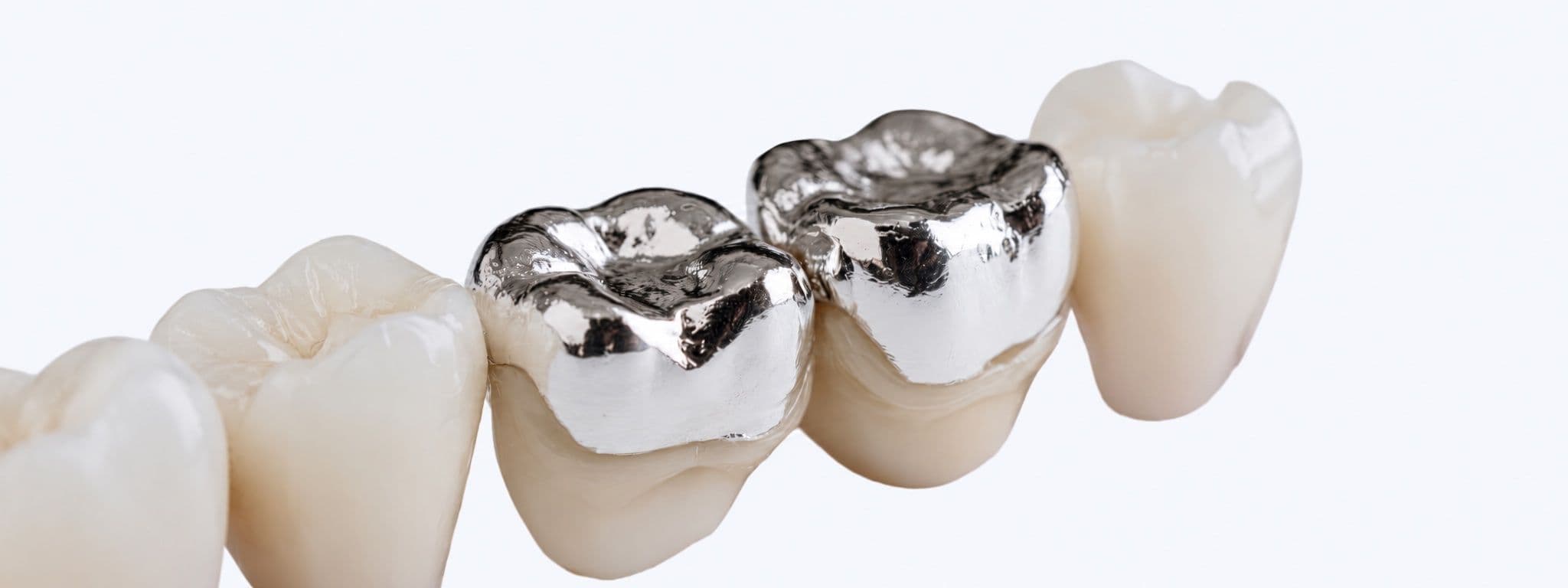
Maybe you have had the same metal filling for so long that you barely notice it anymore. Then, during an appointment, you hear the word amalgam. Or perhaps you come across something online about mercury fillings and suddenly find yourself wondering about a restoration that has been in your mouth for years.
What exactly is in that filling? How long is it supposed to last? And if it contains mercury, should you have it removed?
These are reasonable questions. They are also questions that deserve more than a yes-or-no answer.
Understanding what is in an old filling is one part of the conversation. Understanding the condition of your filling, the tooth around it and what would be involved in replacing it is another.
What Is an Amalgam Filling, Anyway?
Dental amalgam, commonly recognized by patients as a silver or metal filling, has been used to restore teeth for generations. It is made from a combination of metals, including silver, tin and copper, and contains approximately 50% elemental mercury by weight. The mercury helps bind the other metals together to form a material that can be used to restore a tooth. Health Canada has evaluated dental amalgam and continues to provide guidance on its use and on existing restorations. Health Canada
Do Mercury Fillings Need to Be Removed?
Finding out that an old metal filling contains mercury does not, on its own, mean that the filling needs to come out.
Health Canada states that evidence does not warrant the removal of existing amalgam fillings when there are no indications of adverse effects. Its guidance also emphasizes that patients should receive enough information to make informed choices about dental materials and appropriate alternatives.
The United States Food and Drug Administration takes a similar position. If an amalgam filling is in good condition and there is no decay underneath it, the agency does not recommend removing it unless removal is considered medically necessary by a healthcare professional. One reason is that removing an intact restoration can involve the unnecessary loss of healthy tooth structure.
So how do you know whether your old filling should stay or be replaced?
That is where the condition of the individual tooth becomes much more useful than the age or appearance of the filling alone.
When Should an Amalgam Filling Be Replaced?
There is no universal expiry date that determines when every old metal filling should be replaced.
Instead, your dentist can examine the restoration and the tooth around it and consider several factors together.
The condition of the filling: Is the restoration still functioning as intended? Has part of it fractured, become damaged or otherwise changed?
The health of the surrounding tooth: Your dentist will look at the tooth supporting the restoration and assess whether there are signs that require attention.
Decay or symptoms: New decay around or underneath a restoration, pain, sensitivity or other changes can affect the treatment recommendation.
Your overall health and medical history: Certain health considerations may be relevant when discussing dental materials or planning treatment.
Your broader treatment needs: A filling is part of a tooth, and that tooth is part of a larger treatment plan. The appropriate recommendation may depend on what else is happening in your mouth and what treatment the tooth requires.
This is why two people who both have an old metal filling may receive different recommendations. Even two fillings in the same person's mouth may not necessarily require the same treatment.
An assessment should answer a more useful question than simply “How old is this filling?”
It should help you understand: What is happening with this filling and this tooth today?
Should I Be Concerned About the Mercury in My Fillings?
Dental amalgam contains elemental mercury, so it is understandable to have questions about what that means for your health.
Health Canada recognizes that mercury vapour can be released from amalgam restorations during activities such as chewing, brushing and grinding. At the same time, Health Canada does not recommend removing an intact amalgam filling simply because it contains mercury. Its assessment also states that current evidence does not indicate dental amalgam is causing illness in the general population.
There are individual circumstances that deserve separate consideration. Health Canada's guidance includes specific recommendations related to pregnancy, impaired kidney function and hypersensitivity to mercury, among other considerations. If any of these apply to you, the conversation should involve your dentist and, where appropriate, your healthcare provider.
But there is an important distinction between deciding whether an existing filling needs to be replaced and choosing which material to use when it does.
If your filling needs to be replaced, you can discuss the available restorative options with your dentist. You may prefer a mercury-free material, or simply want to understand how different materials compare before making a decision.
At Junction Family Dental Care, we take a thoughtful approach to selecting these materials, considering the condition of the tooth, the treatment required, your preferences and the broader picture of your oral health.
For us, the goal is to help you understand your options and participate in choosing an approach that considers your dental care and overall well-being.
The goal is to understand the evidence and your individual circumstances without turning a complex dental decision into a source of fear.
What Happens When an Amalgam Filling Is Removed? Understanding the SMART Approach
When an amalgam filling is removed, the dentist carefully removes the existing restoration so the tooth can be assessed and restored as needed.
The United States Food and Drug Administration explains that patients and dental professionals may experience a temporary increase in mercury vapour exposure when an old amalgam filling is removed.
Health Canada similarly advises dentists to use techniques and equipment that minimize exposure to mercury vapour when amalgam fillings are placed or removed.
These considerations are part of why precautions matter during the removal procedure.
You may have encountered the term SMART while researching mercury filling removal.
SMART stands for Safe Mercury Amalgam Removal Technique. It is a set of recommendations developed by the International Academy of Oral Medicine and Toxicology for dental professionals who remove amalgam restorations.
The protocol incorporates additional measures intended to reduce exposure to mercury vapour and amalgam particles for the patient, dental team and environment during the removal procedure. Recommendations include measures related to isolation, water irrigation, high-volume suction, air filtration and protective barriers. The protocol also recommends sectioning an amalgam restoration and removing it in larger pieces when possible rather than unnecessarily grinding through the entire restoration.
SMART is a specific protocol that some dental practices, including Junction Family Dental Care, choose to incorporate when removing mercury fillings. Describing these additional precautions does not mean that a dentist who uses a different clinically appropriate removal approach is providing unsafe care.
The decision to remove a filling and the precautions used if removal takes place are two separate conversations.
What Does Amalgam Removal Look Like at Junction Family Dental Care?
When removal is appropriate for a patient, Junction Family Dental Care chooses to incorporate additional precautions based on the Safe Mercury Amalgam Removal Technique.
One part of that approach is how the restoration itself is removed. Rather than unnecessarily grinding through the entire metal filling, the dentist can section or cut around the restoration and carefully remove it in pieces. The Safe Mercury Amalgam Removal Technique recommendations include sectioning amalgam into larger pieces where possible, along with water and high-volume evacuation during removal.
Other measures within the protocol are designed to help isolate the treatment area and manage particles and vapour generated during the procedure.
These are additional precautions our team has chosen to integrate into its approach to amalgam removal. They are part of how our team plans the procedure when removal has already been determined to be appropriate, rather than a reason to remove an otherwise healthy filling.
If you and your dentist determine that an existing restoration should be replaced, the next question is what will restore the tooth afterward.
At Junction Family Dental Care, mercury-free options may include white filling material or porcelain, depending on the tooth and the treatment it requires.
There is no single material that is automatically appropriate for every tooth. Factors such as how much tooth structure remains, the location and size of the restoration and the broader treatment plan can influence the recommendation.
This is another point where asking why can be helpful.
Why is this material being recommended for this particular tooth? What are the advantages and considerations? What can you expect from the treatment?
Health Canada specifically states that patients should be given sufficient information about the risks and benefits of dental materials and suitable alternatives so they can participate in making an informed choice.
Your Filling Is Only One Part of the Decision
At Junction Family Dental Care, we believe understanding your treatment is part of receiving dental care. That means taking the time to look at the condition of your existing restoration, the tooth around it, your health history and the broader picture of your oral health before recommending a next step.
If an amalgam filling does need to be removed, our team can also explain the additional precautions we choose to use through the Safe Mercury Amalgam Removal Technique, what you can expect during the procedure and the options available for restoring the tooth afterward. If it does not need treatment now, understanding why monitoring may be appropriate can be just as valuable.
Have an old metal or mercury filling and are unsure what to do with it? Book an appointment with Junction Family Dental Care. Bring your questions with you. We can assess your existing restorations, explain what we see and help you make an informed decision about your oral health.
The Junction Family Dental Care Editorial Team
Our articles are reviewed by licensed dental professionals to make sure the guidance you read is accurate, current, and genuinely useful.
Want to see your own bacterial profile?
Every cleaning at Junction Family Dental Care includes a closer look at what's really happening beneath the surface — so you can make decisions with clarity.
Book a Cleaning Assessment