
Wisdom Teeth Removal Doesn't Have To Be Stressful
If you've been told it's time to remove your wisdom teeth, you probably have questions and maybe even a few concerns. We'll take the time to explain each step clearly, so you know exactly what to expect and feel supported from beginning to end. If dental anxiety is making you hesitate, IV sedation is available to help you feel more relaxed throughout your procedure.
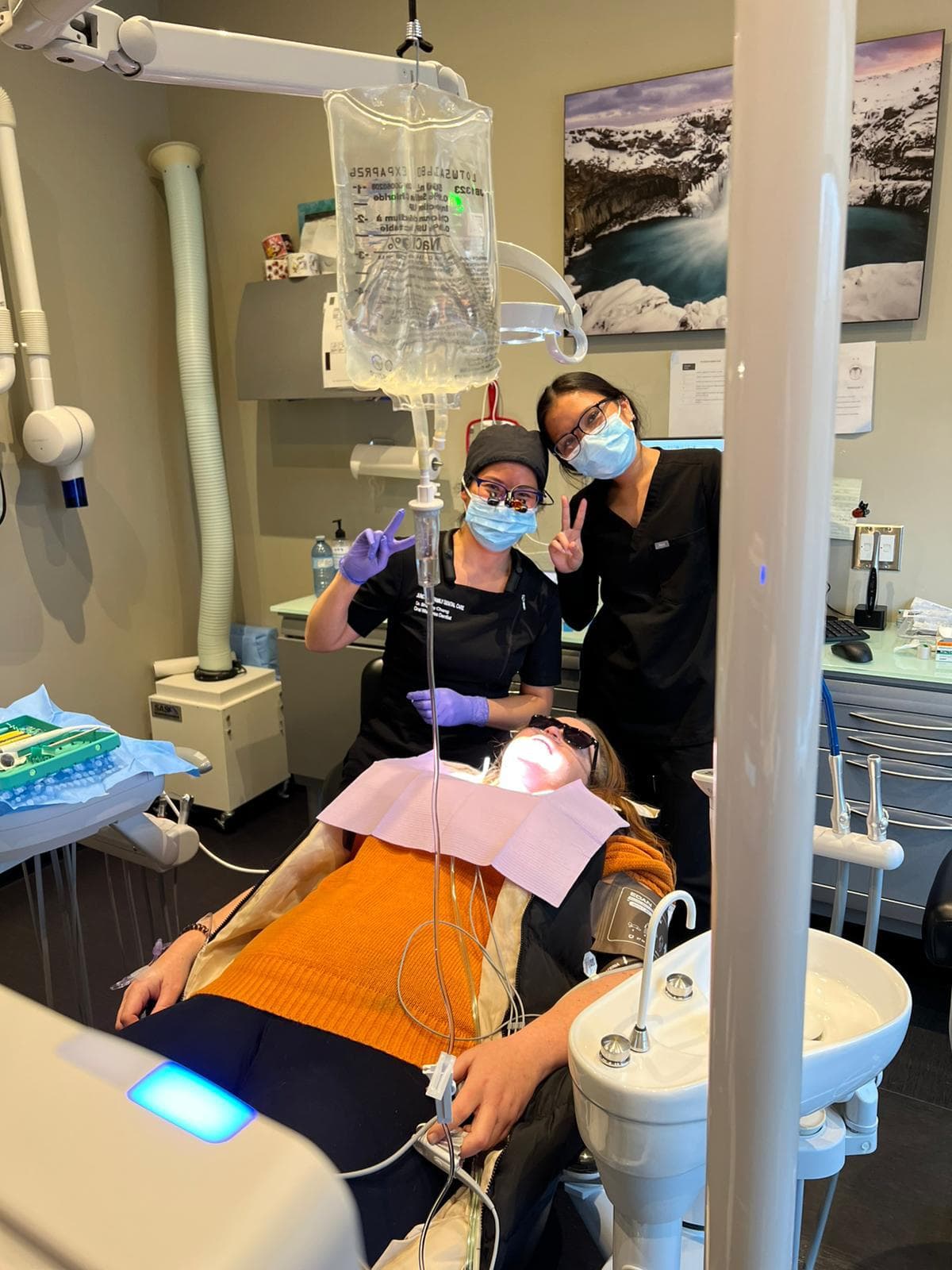
Comfort-focused care — IV sedation available for anxious patients.
Do I Really Need To Remove My Wisdom Teeth?
Common Reasons for Wisdom Teeth Removal
A clinical examination and digital X-rays allow us to evaluate your wisdom teeth and recommend the most appropriate treatment for your smile. These are some of the most common signs that wisdom teeth removal may be the best option.
Impacted wisdom teeth
When wisdom teeth don’t have enough room to erupt properly, they can become trapped beneath the gums or grow at an angle. This may increase the risk of pain, infection, damage to nearby teeth, and, in some cases, cyst formation within the jawbone.
Pain, swelling, or repeated infections
Partially erupted wisdom teeth can trap food and bacteria beneath the gums, leading to infections such as pericoronitis, as well as swelling, discomfort, and recurring inflammation. Removing the wisdom teeth can help prevent these problems from returning.
Pressure on nearby teeth
As wisdom teeth grow, they can press against neighboring teeth, increasing the risk of crowding, damage, and changes in teeth alignment. This may be especially important for patients who have completed orthodontic treatment and want to maintain their results.
Difficult to keep clean
Because of their position at the back of the mouth, wisdom teeth can be difficult to brush and floss properly. Over time, this may increase the risk of cavities, gum disease, and problems affecting the healthy teeth beside them.
What To Expect During Your Wisdom Teeth Removal
From your first consultation to your recovery, our goal is to make the entire experience as smooth and reassuring as possible. Here's what you can expect during your wisdom teeth removal.
Consultation and digital imaging
We'll begin with a comprehensive examination and digital X-rays to evaluate the position of your wisdom teeth. This allows us to determine the safest approach for your procedure and discuss your treatment options before moving forward.
Planning your procedure
Once we've reviewed your treatment plan, we'll explain each step of the procedure, answer your questions, and discuss your anesthesia or IV sedation options so you feel prepared and comfortable before your appointment.
Wisdom teeth removal
Once you're comfortable and the area is fully numb, your dentist will carefully remove the wisdom tooth using the approach that's most appropriate for your case. If the tooth is impacted or difficult to access, it may be removed in smaller sections to minimize disruption to the surrounding tissues and support healing. Before your procedure is complete, the area will be thoroughly cleaned, and stitches may be placed if needed to promote proper healing.
Recovery and aftercare
Before you leave, we'll review your personalized aftercare instructions and answer any remaining questions. Our team will provide guidance to help support a smooth recovery and will be here if you need us after your procedure.
Questions? We Have Answers.
Common questions about wisdom teeth extraction and recovery.
We take every step to make sure you don’t feel pain during your wisdom teeth removal. Local anesthesia is used throughout the procedure, and IV sedation is available if you’d like additional support. We’ll also check in with you regularly to make sure the anesthesia is working properly before continuing. Some swelling and soreness afterward are normal and can usually be managed with the aftercare instructions we provide.
Yes. Wisdom teeth are removed using local anesthesia, so you’ll be awake during the procedure but shouldn’t feel pain. If you feel anxious or would prefer to be more relaxed, IV sedation is also available. We’ll discuss your options and help you choose the approach that’s right for you.
Recovery varies from person to person. Most swelling and discomfort improve within the first few days, while the gums continue healing over the following weeks. We'll provide detailed aftercare instructions and let you know what to expect based on your individual treatment. Platelet-Rich Fibrin (PRF) can be added to your wisdom teeth removal procedure and may help promote faster healing. Learn more about PRF and how it may support your recovery.
It depends on your individual case. In many situations, all four wisdom teeth can be removed during the same appointment. However, depending on factors such as the position of your teeth, the complexity of the procedure, and your overall health, we may recommend removing them over more than one visit. We’ll discuss the best approach for you during your consultation.
Wisdom teeth are often evaluated during the late teenage years or early twenties, as this is when they’re most likely to develop or begin causing problems. If removal is recommended, treatment is often simpler before the roots are fully developed. However, wisdom teeth can be safely removed later in life when needed.
Let's Talk About Your Wisdom Teeth.
Whether you're experiencing discomfort or have been told it's time to have your wisdom teeth evaluated, we're here to answer your questions and help you feel confident about your next step.
Book a consultation