Can Stress Affect My Teeth? The Connection Between Stress, Clenching and Oral Health
Can stress affect your teeth? Discover the connection between stress, teeth grinding, jaw pain, and oral health. Learn the signs of bruxism, how to protect your teeth, and when to seek dental care.
There is always one more email to answer, one more notification to check, one more appointment to remember and one more thing waiting for tomorrow. Even when the workday ends, it can take a little longer for your mind, and sometimes your body, to get the message.
Stress has become a familiar part of everyday life for many Canadians. In 2023, more than one in five Canadian adults described most of their days as quite a bit or extremely stressful, according to Statistics Canada.
So, here is a question worth asking: where does your body hold stress?
For some people, tension shows up in their shoulders. Others notice changes in their sleep or find it harder to concentrate. And sometimes, you may notice it in your jaw before you ever think about your teeth.
Maybe you wake up with a sore jaw. Perhaps your teeth suddenly feel more sensitive. Someone tells you that you grind your teeth while you sleep. Or you catch yourself clenching while working at your computer, sitting in traffic or concentrating on something important.
Your dentist cannot diagnose or treat the stresses in your life. What they can do is help you understand the signs that may be appearing in your mouth, protect your oral health and help you make informed decisions about your care.
Can Stress Cause Teeth Grinding or Clenching?
One of the most common conversations around stress and oral health involves bruxism, the involuntary clenching, grinding or gnashing of teeth. Bruxism can happen while you are awake or asleep, and many people may not realize they are doing it.
The Canadian Dental Association notes that awake clenching may happen during moments of concentration, including while working at a computer, attending meetings or driving.
The relationship between stress and bruxism, however, deserves some nuance.
Research has found an association between psychological stress and bruxism, but that does not mean stress is the single cause of teeth grinding. A systematic review and meta-analysis found evidence of an association, while also highlighting limitations in the available research. Another systematic review looking specifically at sleep bruxism found an association with stress symptoms but rated the certainty of the evidence as very low.
Bruxism can have multiple contributing factors, which is one reason an individual assessment matters.
In other words, your stressful week might be relevant to the conversation, but it should not be the end of it.
What Are the Symptoms of Teeth Grinding or Clenching?
Bruxism does not always announce itself with an obvious dental problem.
Sometimes, the first clues are things you might easily dismiss after a busy week:
- a tired, tight or aching jaw, particularly when you wake up;
- facial or temple discomfort;
- morning headaches;
- aching teeth;
- sensitivity to hot and cold;
- someone hearing you grind your teeth while you sleep; or
- catching yourself clenching your jaw during the day.
The Canadian Dental Association notes that symptoms associated with sleep bruxism may be noticeable when you first wake up and then fade, while symptoms associated with daytime clenching can become more noticeable later in the day.
That makes awareness particularly useful. If you are reading this at your desk, take a second to notice your jaw. Are your teeth touching? Are you clenching without realizing it?
It is a small check-in, but it may tell you something.
What Can Happen When Grinding Continues Over Time?
Your teeth are designed to handle the forces involved in everyday biting and chewing. Repeated grinding and clenching, however, can expose them to additional pressure.
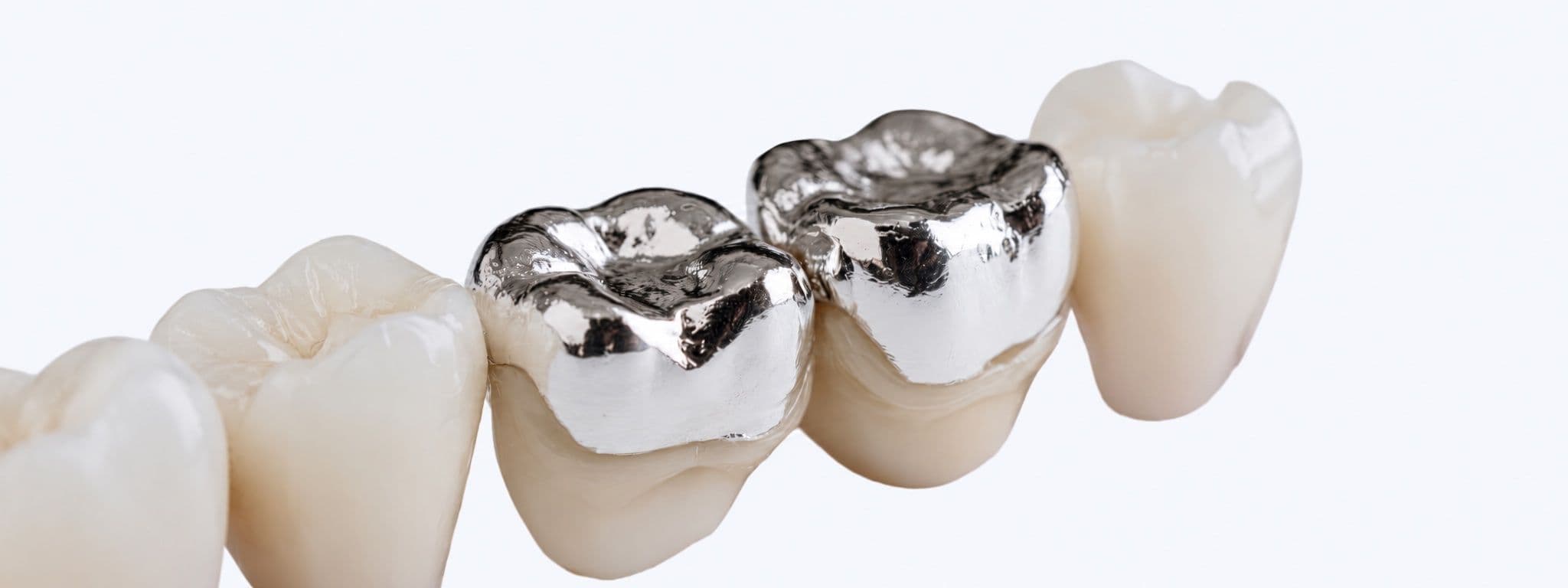
Over time, bruxism may be associated with teeth wear, sensitivity, cracks or fractures and damage to dental restorations such as fillings or crowns. It can also place additional stress on the muscles and joints involved in jaw movement.
One sign your dentist may look for is worn enamel. As the outer surface of a tooth wears, the underlying structure can become more exposed, which may contribute to sensitivity. The National Institute of Dental and Craniofacial Research includes worn enamel, flattened, chipped, cracked or loose teeth, teeth sensitivity, jaw soreness and headaches among the possible signs and symptoms of bruxism.
Importantly, seeing teeth wear does not automatically prove that bruxism is the cause. Dental wear can be influenced by different factors, which is another reason to have changes evaluated rather than trying to diagnose yourself from one symptom.
Bruxism Is Not the Only Way Stress May Show Up in Your Oral Health
Our response to stressful periods can affect our oral health in more than one way.
Think about what happens to routines during an especially difficult week. You may sleep differently, change what or when you eat, forget parts of your usual oral hygiene routine or put off an appointment you meant to book. The Ontario Dental Association notes that stress can affect oral-care habits and identifies several oral-health concerns associated with stress and anxiety, including bruxism and dry mouth.
There are a few other connections worth understanding.
Canker sores: Stress does not simply “cause” a canker sore. However, research involving people with recurrent aphthous stomatitis (canker sores) found that stressful life events were associated with the onset of new episodes, but not their duration. Another study described psychological stress as a possible trigger or modifying factor rather than a direct cause.
Dry mouth: Some medications used to manage stress-related or mental-health conditions can contribute to dry mouth. Saliva helps wash away food and neutralize acids therefore persistent dry mouth is something worth discussing with your dentist r,ather than simply accepting as an inconvenience.
Gum health: Research has also explored an association between psychological stress and periodontal disease. A systematic review found that some studies reported a positive association, but researchers emphasized that more evidence is needed to better understand the relationship.
The common thread is not that stress inevitably causes dental disease. It is that what is happening in your life can provide useful context when you and your dentist are trying to understand changes in your oral health.
So, What Can You Actually Do?
Start by noticing.
If you clench during the day, becoming aware of the habit can be useful. The National Institute of Dental and Craniofacial Research suggests using reminders to help keep your teeth apart if you tend to clench or grind while awake.
Your dentist can also examine your teeth, restorations, jaw and surrounding structures for signs that may be consistent with bruxism and discuss appropriate next steps based on what they find.
And taking care of your oral health does not mean ignoring what may be happening outside your mouth.
Health Canada recommends identifying sources of stress and considering strategies such as physical activity, deep breathing, relaxation exercises and talking about what you are experiencing. When stress becomes difficult to manage, speaking with your family physician or an appropriate mental-health professional may also be helpful.
Your dentist is not your therapist but there is value in giving them enough context to understand what has changed and how it affects your mouth.
Does a Night Guard Help With Teeth Grinding?
For some patients, your dentist may recommend a custom-fitted night guard, also called an intraoral appliance.
A night guard creates a physical separation between the teeth. According to the Ontario Dental Association, these appliances can help prevent teeth damage and may reduce muscle activity associated with grinding and clenching. The Ontario Dental Association also recommends discussing a custom-fitted night guard with your dentist when bruxism is a concern.
There is an important distinction here: protecting your teeth from the effects of grinding is not necessarily the same as addressing everything contributing to the grinding itself.
That is why a dental assessment comes first. Your dentist can look at the signs in your mouth, listen to what you have been experiencing and determine whether a night guard or another approach may be appropriate for you.
Try This: Give a Tense Jaw a Moment to Relax
If your jaw muscles feel tense or sore, gentle self-care may provide some comfort.
The Canadian Dental Association recommends gently massaging the jaw muscles as one way to help ease sore muscles associated with temporomandibular disorders. Clinical patient guidance from Leeds Teaching Hospitals also describes gentle massage of two muscles commonly involved in jaw tension: the masseter, located along the side of your jaw, and the temporalis, located around the temple.
A simple approach is to relax your jaw and allow your teeth to sit slightly apart. Using your fingertips, gently massage the muscles around your temples with small circular movements. You can also gently massage the masseter on the outside of your cheek, along the side of the jaw. NHS guidance recommends keeping the pressure gentle rather than forcing a painful muscle.
Think of this as a moment of relief for tense muscles, not as a treatment for bruxism itself.
Persistent pain, difficulty opening or closing your mouth, teeth sensitivity, damaged teeth or other ongoing symptoms deserve professional assessment.
Your Mouth Can Give You Useful Information
A sore jaw one morning does not necessarily mean something is wrong. Neither does going through a stressful week mean that you will develop bruxism or another oral-health condition.
But when a symptom keeps returning, changes or begins affecting your daily life, it is worth paying attention.
Your mouth does not exist separately from the rest of your life. When something changes, context matters. Our role is to listen to what you have been experiencing, carefully assess what we can see clinically and help you understand what those findings may mean for your oral health. It is an approach that combines the warmth of a long-term care relationship with evidence-informed dentistry and transparent communication.
At Junction Family Dental Care, we believe understanding what is happening is an important part of caring for your oral health. Our approach is centred around education, clear information and giving you the opportunity to ask questions, understand your options and participate in decisions about your care. That reflects our broader philosophy of being a health partner rather than simply addressing an isolated tooth or symptom.
If you have noticed jaw tension, teeth sensitivity, signs of grinding or another change in your mouth, talk to us.
Book an appointment with Junction Family Dental Care and let’s take a closer look at what your mouth may be telling you.
The Junction Family Dental Care Editorial Team
Our articles are reviewed by licensed dental professionals to make sure the guidance you read is accurate, current, and genuinely useful.
Want to see your own bacterial profile?
Every cleaning at Junction Family Dental Care includes a closer look at what's really happening beneath the surface — so you can make decisions with clarity.
Book a Cleaning Assessment